Study Centre · The basics
A tortoise cannot leave its shell. Understanding this simple distinction changes how we see and respect it.
In brief
The shell is not a separate container: it is a living part of the body and should not be treated as an object.
Two terms to know
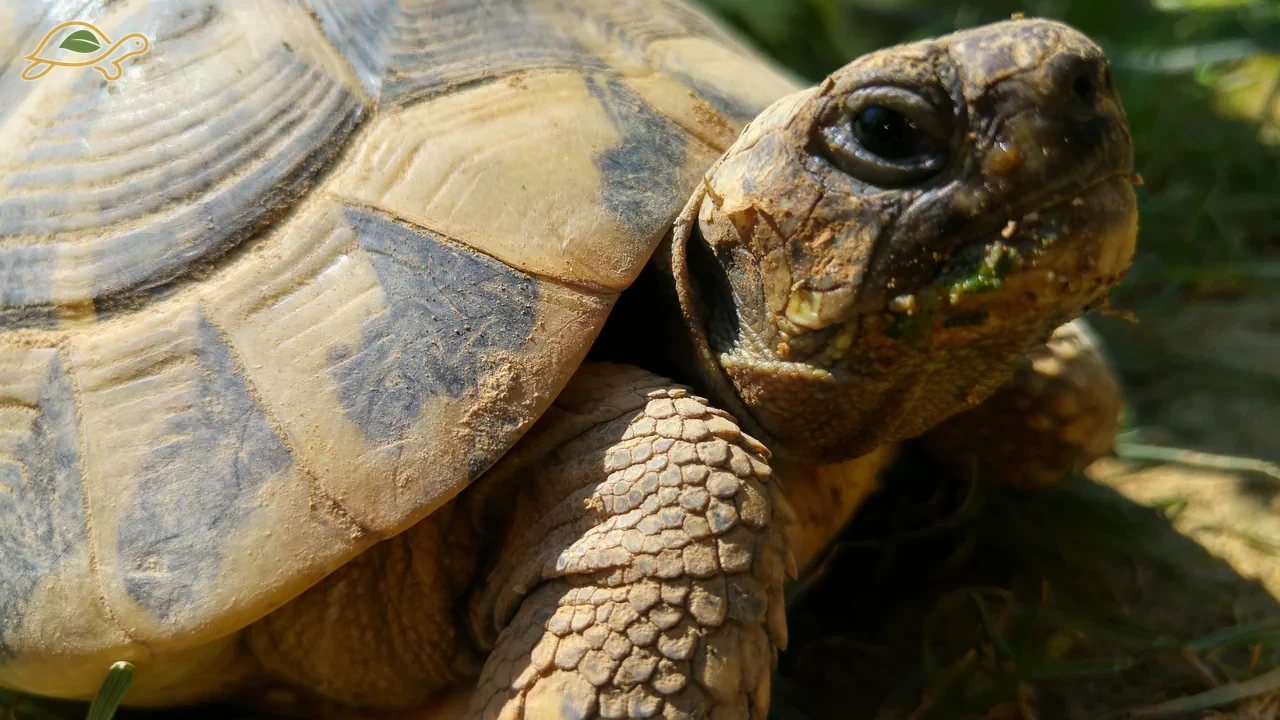
The upper part is called the carapace; the lower part, the plastron. The shell includes bony structures connected to the skeleton: the ribs and spine are not hidden inside an independent “little house”. In many species, the outer layer has keratin scutes. [1]
Clear natural-history photographs are enough to recognise these features. There is no need to turn a tortoise over and make it an object of examination.
Protection does not mean invulnerability
The shell protects, but it is not insensitive. A tortoise can feel pressure and pain through this part of its body. Its tough appearance does not justify knocks, writing on it or unnecessary handling. [1]
When describing these animals, “armour” may be an evocative word, but it should be used carefully: natural protection does not remove the animal’s vulnerability.
An injury is not repaired like an object
A case described by San Diego Zoo Wildlife Alliance in 2026 concerns an aquatic turtle with a shell infection: its treatment required examinations and prolonged veterinary care. It was not an animal belonging to the Foundation. It is a concrete example of why a damaged surface should not be judged by its external appearance alone. [2]
This article does not recommend glues, paints or home remedies. An injury requires qualified assessment; a tutorial cannot determine the depth of the damage.
Observe without altering
For a respectful photograph, let the animal keep its own position. Observe the curve of the carapace, its visible pattern and its relationship with the ground. Do not add decorations to make it more recognisable.
The first step in a culture of care is this: stop seeing a tortoise as a small, tough object and recognise a living body with needs of its own.
Understand. Respect. Protect.
Sources and limits of this article
[1] San Diego Zoo, Turtle and Tortoise
Shell anatomy and sensitivity.
[2] San Diego Zoo Wildlife Alliance, Healing on Turtle Time (2026)
A documented clinical case, separate from the Foundation’s animals.
Sources consulted on 9 September 2026. General educational information: it does not replace veterinary assessment of an individual animal.